Peptide Pureness Overview 98%, 99% & Research-grade Described Prg
Peptide Top Quality: Relevance Of Third-party Validation
The top quality and reliability of a peptide purity measurement rely on approach parameters and documents top quality. The mobile stage, commonly a blend of water, acetonitrile, and an acid modifier, is saved in storage tanks and delivered through the system by a high-pressure pump. The pump preserves accurate flow prices, frequently in the series of 0.5 to 2.0 mL/min relying on the method and column layout. High stress compels the mobile phase via snugly packed fragments inside the column, creating sharper splittings up and greater resolution than traditional low-pressure chromatography.The purity of peptides is commonly evaluated making use of high-performance liquid chromatography (HPLC). HPLC divides peptides based on their communications with a stationary stage, allowing impurities and spin-offs to be identified and measured. In addition, mass spectrometry (MS) can be utilized to validate the peptide's molecular weight and sequence, supplying additional confirmation of pureness by detecting impurities and degradation products. If you have actually ever before acquired an artificial peptide for a laboratory experiment, you've most likely noticed a pureness portion on the certification of evaluation-- generally worths like 95%, 98%, and even 99%. Peptide pureness is a crucial high quality metric that tells you what fraction of a peptide example is the desired product versus undesirable by-products.
Just How To Review A Peptide Pureness Examination: Hplc, Mass Spectrometry And Coa Interpretation For Uk Scientists (
- The release process of peptide formulations is complicated, and an absence of scientific information hinders growth.
- During the discovery, we use RP-HPLC incorporated with MS to establish the molecular weight of the peptide.
- This process is essential for preserving high peptide quality due to the fact that the peptide market is greatly unregulated in lots of locations, and without validation some vendors may supply impure, mislabeled, and even counterfeit peptides [3]
- Desalted peptides function well for ELISA finishing, some cell-based assays, and applications where modest pureness is acceptable.
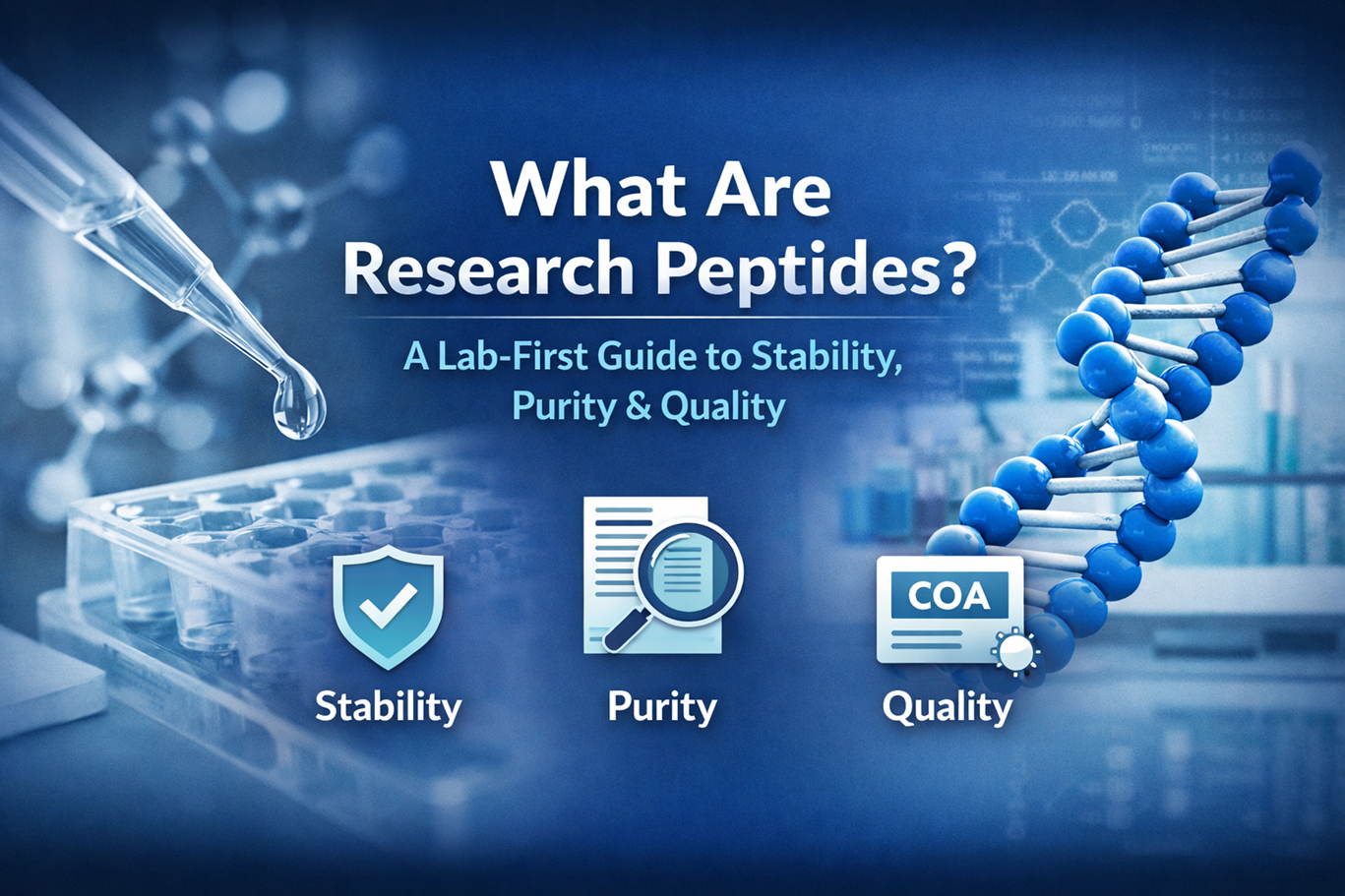
Determining peptide pureness is normally done with logical high-performance fluid chromatography (HPLC), frequently combined with mass spectrometry (MS) for identity confirmation. These analytical methods are standard in peptide quality control and you will usually get HPLC and MS information with a study peptide order. The main analytical techniques for peptides include liquid chromatography (LC), normally HPLC, combined with mass spectrometry (MS) for precise molecular weight decision and series validation.
Summary: What A Research-grade Coa Needs To Consist Of
A strong examination report can support pureness, identity, and batch traceability. It does not turn a study compound into a professional item, and it does not replace experimental validation in the researcher's very own system. Peptide purity isn't simply a number on a label-- it's a window into the top quality of the artificial procedure and a predictor of exactly how trusted your research results will be. At Ethos Analytics, we offer specialized peptide screening and quantitation services to sustain research, pharmaceutical, and nutraceutical applications. Our lab utilizes modern instrumentation and confirmed methodologies to ensure accurate, reproducible data throughout even one of the most complicated peptide matrices. William is a research study expert at Peptides Laboratory UK, being experts in study peptides, laboratory substances, and sourcing requirements for high-purity peptide items.
Unlike a manufacturer's in-house testing, independent third-party lab recognition is neutral and gives impartial outcomes, including reputation with objective analytical data. This procedure is critical for keeping high peptide top quality since the peptide market is largely uncontrolled in several locations, and without validation some suppliers might supply unclean, mislabeled, and even phony peptides [3] Making sure that each batch undergoes proper lab screening aids confirm the peptide's authenticity and purity, which is essential for both research study credibility and safety and security. Peptide pureness describes the percent of your sample that is the right, full-length peptide sequence, without various other peptide-related impurities. For example, a pureness of 98% shows that 98% of the peptide product is the intended item, while the various other 2% may be undesirable remnants of synthesis (such as incomplete sequences or amino acid removal variations).